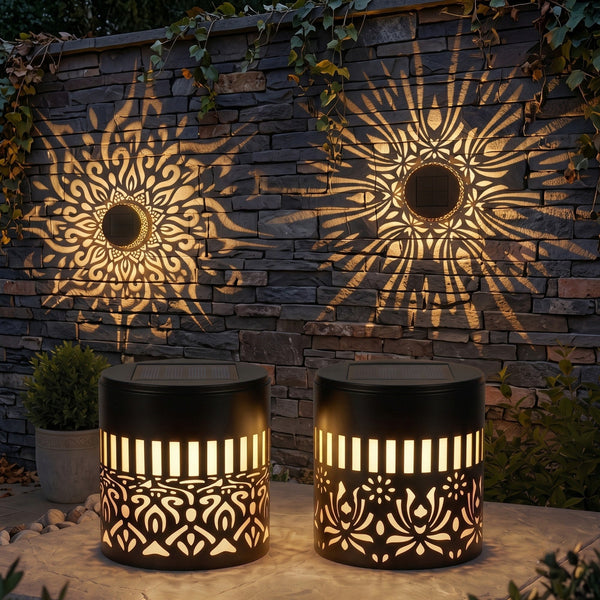
Short answer: yes, solar lights work in winter, but they will not glow as long as they do in July. Here is what actually changes, and what you can do about it.
Why winter run time is shorter
A solar light has two jobs: charge by day, glow by night. In winter both get harder. Days are shorter, the sun sits lower, and clouds, snow and frost can cover the panel. On a clear summer day an ALPAYESI light gets 6–8 hours of direct sun and glows for up to 8–10 hours. On a grey December day it may only charge for 3–4 hours and run for a few hours after dusk.
That is normal for every solar light on the market. The difference is whether the light survives the season: thin plastic housings crack and yellow in freezing weather, while a powder-coated metal body with an IP54 enclosure handles rain, snow and temperatures down to -4°F / -20°C.
Five ways to get more light on short days
- Chase the sun. Mount the light where the panel gets the longest stretch of direct sun, usually a south-facing fence, wall or post.
- Keep the panel clear. Brush off snow and wipe frost or dust from the top panel once a week. A covered panel charges almost nothing.
- Avoid shade from eaves and trees. Winter sun is low, so a spot that was sunny in summer may be shaded at noon in January.
- Give it a full-sun day first. If a light has been in a box, unlock the switch under the lid and let it charge for a full day before the first night.
- Expect decorative light, not floodlight. These lights project a mandala pattern 2–3 ft across a nearby surface. For security lighting, pair them with a motion sensor light.
What to look for when buying
- A metal body, not plastic, with a weather rating (IP54 or better).
- A stated operating temperature that covers your winter.
- Honest run-time figures that mention cloudy days.
- A guarantee you can actually use. ALPAYESI lights come with a 30-Day Glow Guarantee and free shipping in the lower 48.
Decorative ambient light, not a floodlight: that is the honest promise. Mount them right and they will glow through the winter, just a little less each night than in summer.